Skip to content
dronacharya.ai
← JEE Advanced 2014 · Paper 2
ChemistryList match+3 / -1Question 38 of 60

JEE Advanced 2014 · Paper 2, Chemistry question 38

Match the four starting materials (P, Q, R, S) given in List I with the corresponding reaction schemes (I, II, III, IV) provided in List II and select the correct answer using the code given below the lists.

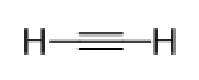
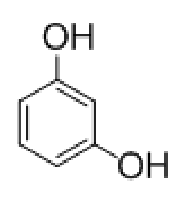
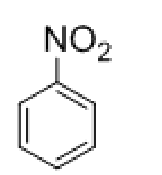
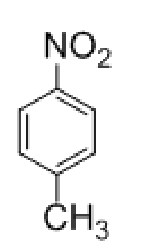
Acetylene (ethyne), H-C≡C-H.Resorcinol (benzene-1,3-diol).Nitrobenzene (a benzene ring bearing one NO₂ group).4-Nitrotoluene (p-nitrotoluene).

List-I

  • P
  • Q
  • R
  • S

List-II

  • 1
    Scheme I: ? →(i) KMnOX4,HOX−, heat (ii) HX+,HX2O (iii) SOClX2 (iv) NHX3\xrightarrow{\text{(i) }\ce{KMnO4}, \ce{HO-}\text{, heat (ii) }\ce{H+}, \ce{H2O}\text{ (iii) }\ce{SOCl2}\text{ (iv) }\ce{NH3}} CX7HX6NX2OX3\ce{C7H6N2O3}
  • 2
    Scheme II: ? →(i) Sn/HCl (ii) CHX3COCl (iii) conc. HX2SOX4 (iv) HNOX3 (v) dil. HX2SOX4, heat (vi) HOX−\xrightarrow{\text{(i) Sn/HCl (ii) }\ce{CH3COCl}\text{ (iii) conc. }\ce{H2SO4}\text{ (iv) }\ce{HNO3}\text{ (v) dil. }\ce{H2SO4}\text{, heat (vi) }\ce{HO-}} CX6HX6NX2OX2\ce{C6H6N2O2}
  • 3
    Scheme III: ? →(i) red hot iron, 873 K (ii) fuming HNOX3,HX2SOX4, heat (iii) HX2S ⋅ NHX3 (iv) NaNOX2,HX2SOX4 (v) hydrolysis\xrightarrow{\text{(i) red hot iron, 873 K (ii) fuming }\ce{HNO3}, \ce{H2SO4}\text{, heat (iii) }\ce{H2S.NH3}\text{ (iv) }\ce{NaNO2}, \ce{H2SO4}\text{ (v) hydrolysis}} CX6HX5NOX3\ce{C6H5NO3}
  • 4
    Scheme IV: ? →(i) conc. HX2SOX4, 60 °C (ii) conc. HNOX3, conc. HX2SOX4 (iii) dil. HX2SOX4, heat\xrightarrow{\text{(i) conc. }\ce{H2SO4}\text{, 60 °C (ii) conc. }\ce{HNO3}\text{, conc. }\ce{H2SO4}\text{ (iii) dil. }\ce{H2SO4}\text{, heat}} CX6HX5NOX4\ce{C6H5NO4}
Choose one option
Answer and worked solution

Official answer: C

Scheme I (CX7HX6NX2OX3\ce{C7H6N2O3}): side-chain oxidation, acid chloride, amide. From 4-nitrotoluene: 4-nitrobenzoic acid → acid chloride → 4-nitrobenzamide, OX2N−CX6HX4−CONHX2\ce{O2N-C6H4-CONH2}. S → I.

Scheme II (CX6HX6NX2OX2\ce{C6H6N2O2}): reduce the nitro group, protect as acetanilide, block the para position with SOX3H\ce{SO3H}, nitrate ortho, then remove the sulphonic acid and acetyl groups with dilute acid. From nitrobenzene this gives 2-nitroaniline. R → II.

Scheme III (CX6HX5NOX3\ce{C6H5NO3}): acetylene trimerises over red-hot iron to benzene; nitration gives 1,3-dinitrobenzene; (NHX4)X2S\ce{(NH4)2S} reduces one nitro group (3-nitroaniline); diazotisation and hydrolysis give 3-nitrophenol. P → III.

Scheme IV (CX6HX5NOX4\ce{C6H5NO4}): sulphonate resorcinol (blocking 4 and 6), nitrate at C2, then desulphonate: 2-nitroresorcinol. Q → IV.

(C) P → 3, Q → 4, R → 2, S → 1