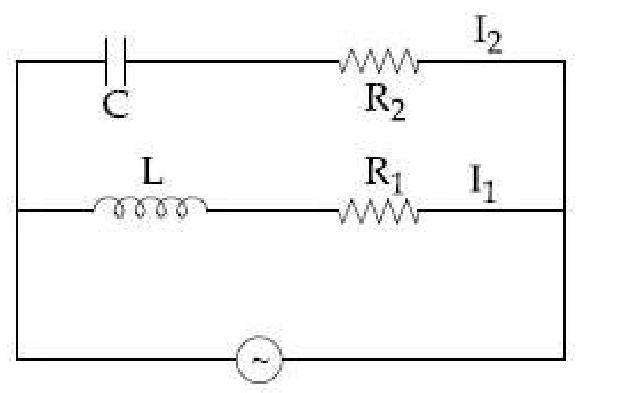
In the above circuit, μF, Ω, H and Ω. Current in L- path is and in C- path it is . The voltage of A.C source is given by, volts. The phase difference between and is :
From JEE Main 2019 · 12 Jan · Shift 2
In the above circuit, μF, Ω, H and Ω. Current in L- path is and in C- path it is . The voltage of A.C source is given by, volts. The phase difference between and is :
Worked solution
L-R₁ branch. Ω with Ω: the current lags by 60°.
C-R₂ branch. With C as printed (√3/2 μF), kΩ ≫ 20 Ω and the current would lead by almost 90°, a difference of about 150°, which is not an option. With mF, Ω and the current leads by 30°.
Phase difference , taking C in mF (the printed μF is evidently a slip).
(C)
Every past question tagged to the same part of the syllabus, with solutions.
Timed, in the real format, and marked the moment you submit.