The List-II contains products obtained from the reaction of compounds in List-I with /Zn- followed by cyclization (via more stable enolate) in the presence of aqueous NaOH. Match each entry in List-I with appropriate entry in List-II and choose the correct option.
← JEE Advanced 2026 · Paper 1
ChemistryList match+4 / -1Question 47 of 48
JEE Advanced 2026 · Paper 1, Chemistry question 15
List-I
- P
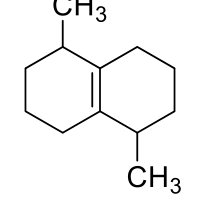
- Q
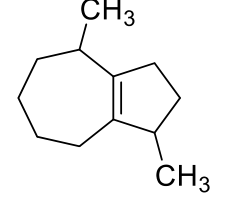
- R
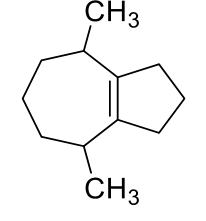
- S
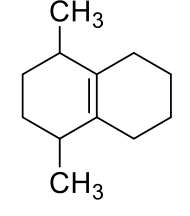
List-II
- 1
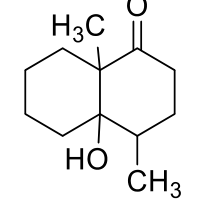
- 2
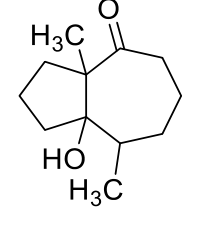
- 3
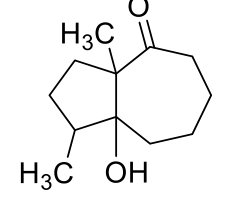
- 4
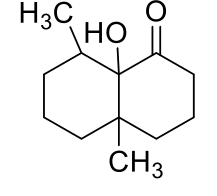
- 5
Answer and worked solution
Official answer: C
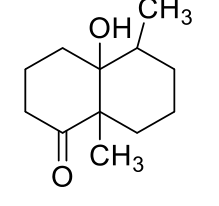
General course. Ozonolysis of the tetrasubstituted ring-fusion alkene opens both rings into one ten-membered ring with two ketones. Each ketone has a neighbour. The more stable (more substituted) enolate forms at that carbon and attacks the other ketone, giving a fused β-hydroxy ketone. The former carbon becomes a fusion carbon bearing ; the attacked carbonyl becomes the other fusion carbon, bearing OH.
(P) Each ketone has its on opposite sides (3 carbons between one pair, 3 between the other). Bond formation closes a 5-ring and a 7-ring. The C=O stays in the 7-ring next to the fusion carbon, and the other is on the 7-ring next to the OH carbon → 2.
(Q) From the 7/5 system, the new bond closes two 6-rings. The C=O and the other end up in the same ring, next to the and OH fusion carbons respectively → 1.
(R) Both groups were on the 7-ring. The new bond again gives two 6-rings, but now the C=O is in one ring and the second is in the other, next to the OH carbon → 5.
(S) Both groups were on one 6-ring. The new bond closes a 5-ring (with the second , next to the OH carbon) and a 7-ring (with the C=O, next to the fusion carbon) → 3.
P→2, Q→1, R→5, S→3.