The total number of distinct naturally occurring amino acids obtained by complete acidic hydrolysis of the peptide shown below is
← JEE Advanced 2014 · Paper 1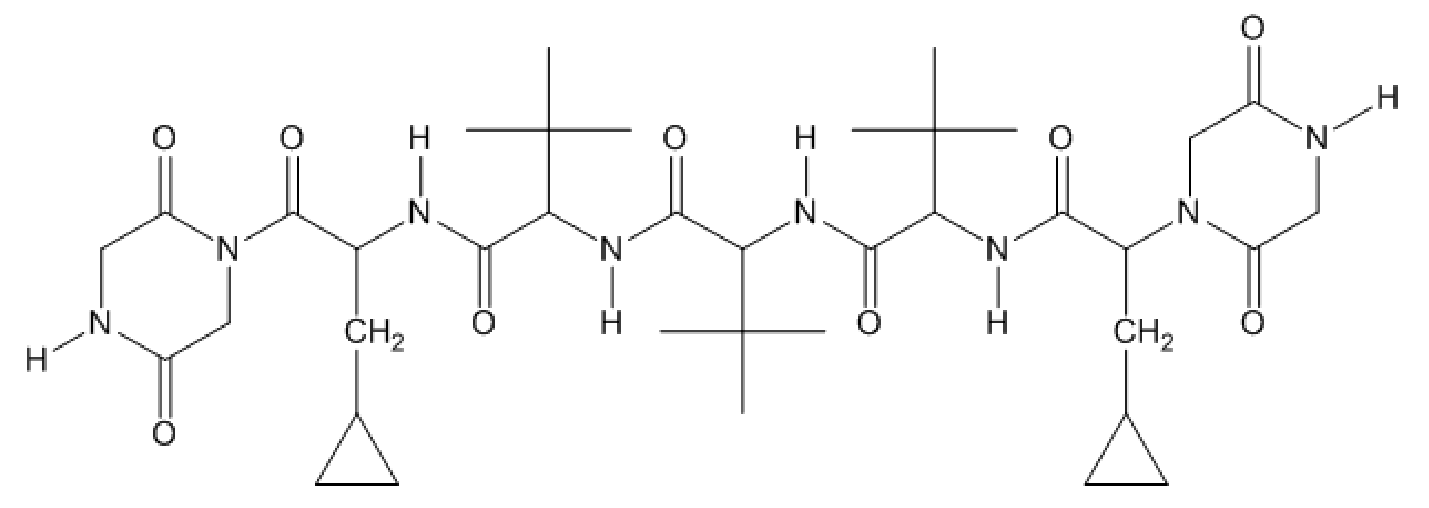
ChemistryInteger+3Question 36 of 60
JEE Advanced 2014 · Paper 1, Chemistry question 36
Answer and worked solution
Official answer: 1
Hydrolysis products.
- The two 2,5-diketopiperazine end rings are cyclic glycine dipeptides; they give glycine.
- The residues with a -cyclopropyl side chain give β-cyclopropylalanine, which is not one of the naturally occurring (protein) amino acids.
- The residues with a tert-butyl side chain give tert-leucine, also not naturally occurring.
Only one distinct natural amino acid, glycine, is obtained.
Answer: 1
Topics:Amino acids and proteins