Calcium butanoate on heating followed by treatment with 1,2-ethanediol in the presence of catalytic amount of an acid, produces a major product which is
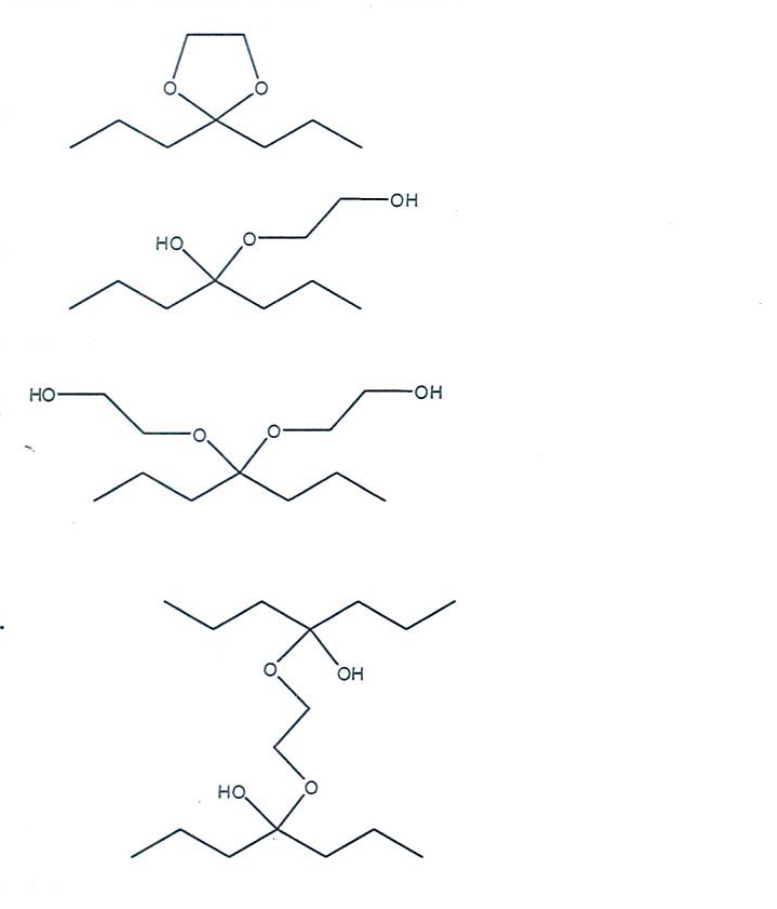
From KVPY 2014 · Streams SB/SX
Calcium butanoate on heating followed by treatment with 1,2-ethanediol in the presence of catalytic amount of an acid, produces a major product which is
Worked solution
Step 1: dry distillation of the calcium salt.
A calcium carboxylate on heating gives the symmetrical ketone:
i.e. heptan-4-one (dipropyl ketone).
Step 2: 1,2-ethanediol with acid.
A 1,2-diol converts a ketone into a cyclic five-membered ketal (a 1,3-dioxolane), water being removed:
The open hemiketal and the acyclic bis-adduct of the other options are not the thermodynamic products under acid with a 1,2-diol.
(A)
Every past question tagged to the same part of the syllabus, with solutions.
Timed, in the real format, and marked the moment you submit.